
Solar Panel Installation – Complete Guide
How to install a solar panel? Solar panel installation involves assessing your roof, designing the system, installing mounting structures, fixing solar panels, connecting wiring and an inverter, testing the system, and activating it for electricity generation. For safety, performance, and warranty protection, professional installation is strongly recommended. With rising electricity prices in Pakistan, more homeowners and businesses are switching to solar energy. A properly installed solar system can significantly reduce electricity bills, provide reliable power, and increase property value. However, installing solar panels is more than simply placing panels on a roof. It requires careful planning, correct equipment selection, proper wiring, and compliance with local regulations. The biggest threat to your solar investment is not the weather, not the panels, not the inverter; it’s hiring the wrong person to install it. This guide covers everything you need to know about solar panel installation, including the installation process, roof requirements, system sizing, common mistakes, and maintenance tips.
What is Solar Panel Installation?
Solar panel installation is the process of setting up a system that converts sunlight into electricity using photovoltaic (PV) technology. These systems are installed on rooftops or open land and connected to your home or business electrical system.
The main goal is to reduce dependency on grid electricity and lower monthly bills.
Main Components of Solar Panel Installation
- Solar Panels
- Solar panels capture sunlight and convert it into DC electricity
- Monocrystalline (high efficiency)
- Polycrystalline (budget-friendly)
- Bifacial panels (advanced technology)
- Solar Inverter
- The inverter converts DC electricity into AC power for home use
- String inverter
- Hybrid inverter
- Micro inverter
- Mounting Structure
- Holds the solar panels securely on the roof or ground
- Wiring and Protection System (DC and AC wiring)
- Includes cables, earthing, and safety devices like breakers
- Earthing System
- Circuit breakers and protection devices
- Batteries (Optional)
Solar Panel Installation Process Step-by-Step
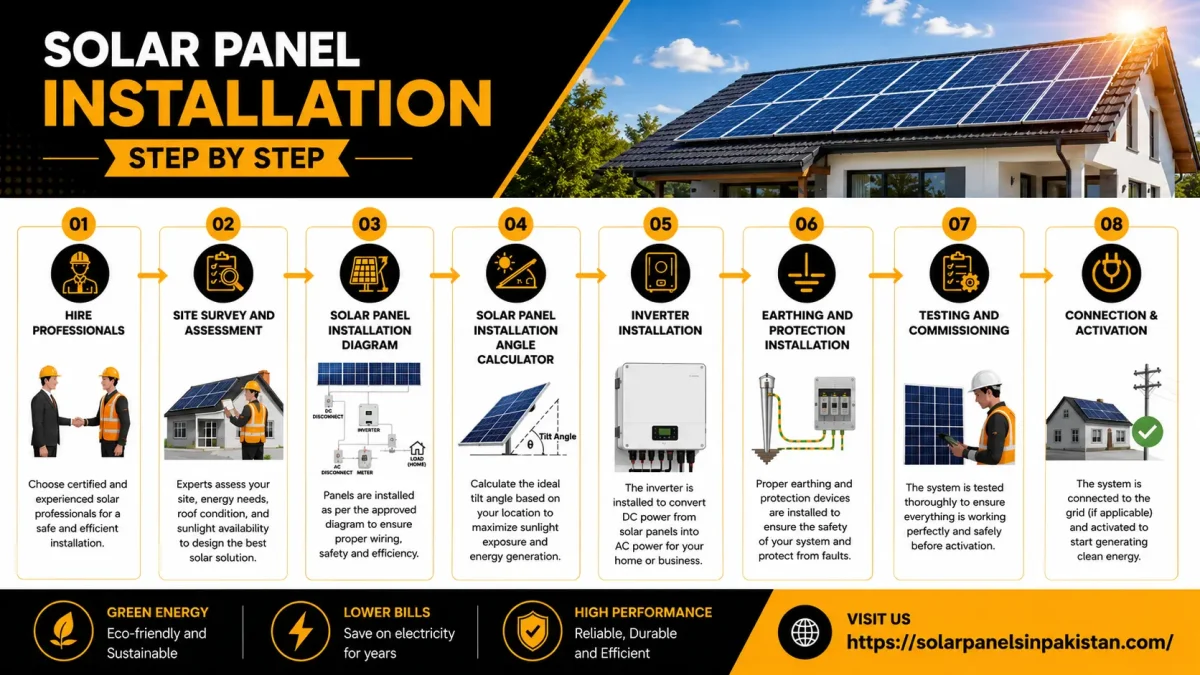
- Hire Professionals
- The solar panel system is a long-term and costly project, so it’s advisable to hire a professional team or company.
- Hire professionals with a good reputation and extensive experience in solar system installation.
- Consider hiring local professionals, as you may need them again for future inspections or maintenance.
- Initial Consultation and Load Assessment
- The first step is a proper meeting with a professional installer or company. A qualified installer will calculate exactly how many panels you need, what inverter capacity is required, and whether you need batteries and how many. This is not guesswork; it is engineering.
- Clearly explain your electricity needs, which appliances you run, and for how many hours per day.
- Discuss which type of system suits you: On-Grid, Off-Grid, or Hybrid
- Let the professional calculate your actual load requirements
- Site Survey and Assessment
- These professionals will visit the site, roof size, or the location where you want to install panels.
- In real installations in Pakistan, the site survey step is where most problems start. Installers often ignore roof shading from water tanks or nearby walls, which later reduces system output by 10–20%.
- Solar cells must be exposed to sunlight. They will decide the best location for installation after surveying the site.
- They will calculate the system size
- Solar panel installation Feasibility report
- Hired professionals will conduct a comprehensive assessment of the entire structure after all evaluations.
- They will help you decide which solar panel to purchase: monocrystalline, polycrystalline, thin-film, or double-glass.
- Select solar panels
- After choosing solar panels, it is essential to understand the grid system.
- Which type of solar system do you want to install: on-grid, off-grid, or hybrid?
- Do you want to install it only for the day, or save excess energy for the night as well?
- If you install an on-grid system, you will need net metering to send excess electricity back to the grid for night use.
- Otherwise, you will need solar batteries and off-grid/hybrid solar inverters to store excess energy.
- Solar panel installation diagram
- After the solar panel selection, installers will create the structural design of the solar panel installation diagram and list all the components required for the installation, including the solar panel, battery, metering, solar panel wires, solar panel stand, Inverter, switches, breakers, and others.
The solar panel installation diagram helps us understand the flow of electricity from the solar panels and the installation structure. The main components are,- Solar panels convert sunshine into DC electricity
- Inverter Use for converting DC to AC electricity for use
- Electrical kit: Use for distributing electricity for use
- Metering Electricity tracker from the grid
- Batteries need to store extra electricity for later use
- Switches are placed between the Inverter and the solar panels. It’s used to disconnect panels and the Inverter for any reason.
- After the solar panel selection, installers will create the structural design of the solar panel installation diagram and list all the components required for the installation, including the solar panel, battery, metering, solar panel wires, solar panel stand, Inverter, switches, breakers, and others.
- Solar panel mounting system
- Panel mounting systems are a crucial factor in solar system installation. Solar panel security depends on it.
Solar panel mounting systems are responsible for two things- Solar panels are securely fixed to the roof or field where they are installed
- The installation angle is correct to receive maximum sunlight
- Panel mounting systems are a crucial factor in solar system installation. Solar panel security depends on it.
- Solar panel installation angle calculator
- Fixed angle as your latitudes
- Tilt angle is not the same for every city in Pakistan. For example, Lahore and Islamabad need higher tilt due to seasonal sun variation, while Karachi works well with lower angles due to consistent sunlight.
- In summer, the Latitudes should be -15 degrees, and the angle should be flatter.
- In Winter, latitudes should be +15, and the angle should be Steeper
- In spring, the angle should be between summer & winter
- You can explore online tools to search for a solar panel angle calculator
- Inverter Installation
- The inverter is mounted in a cool, ventilated location
- Earthing and Protection Installation
- Earthing protects the system from electrical faults and lightning damage
- Protection devices are installed to improve safety and reliability
- Testing and Commissioning
- The system is tested for performance
- Final inspection is completed
- Connection & Activation
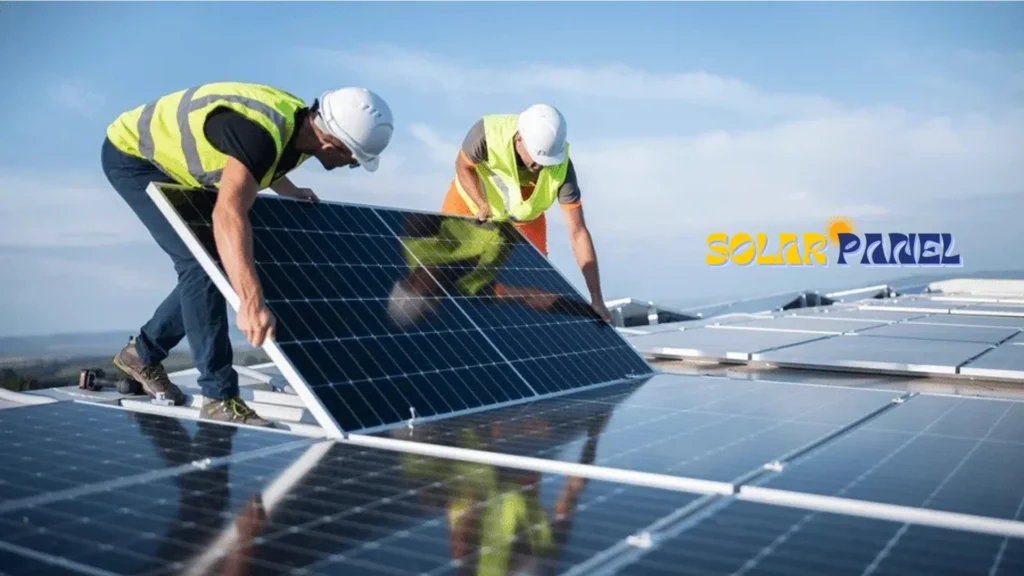
- The installer will mount the panels correctly and connect them to the inverter, batteries, and the grid system.
The electrician will install the electrical panel and wiring, ensuring safety and security in accordance with standardised diagrams.
After the final inspection, the solar system will be activated and ready for solar energy production.
- The installer will mount the panels correctly and connect them to the inverter, batteries, and the grid system.
- Approval and Net Metering (Optional)
- Apply for a net metering license
- Get approval from DISCO (WAPDA, LESCO, MEPCO)
How Much Does Solar Panel Installation Cost in Pakistan?
Solar panel installation prices in Pakistan depend on system size, equipment quality, and installation standards, but overall, they have become more affordable due to growing demand and improved technology. In 2026, the average cost ranges from around PKR 150,000 to 180,000 per kW, meaning a typical 5kW solar system may cost between PKR 800,000 and 1.1 million with standard components. Prices can increase if you choose high-efficiency Tier-1 panels, hybrid inverters, or lithium batteries for backup. Factors like roof structure, wiring quality, and net metering setup also impact the final cost. Despite the initial investment, solar installation offers strong long-term savings by significantly reducing electricity bills, making it a cost-effective and smart energy solution for homes and businesses in Pakistan. Here, I will discuss factors involving solar installation costs and the cost breakdown structure.
| System Size | Price Range (PKR) |
| 3KW solar System | 500,000 – 700,000 |
| 5KW Solar System | 800,000 – 1,100,000 |
| 10KW Solar System | 1,400,000 – 1,800,000 |
| 15KW Solar System | 1,600,000 – 2,000,000 |
| 20KW Solar System | 1,900,000 – 2,500,000 |
The following factors can affect solar installation cost
Benefits of Solar Panel Installation
- Lower Electricity Bills
- Solar reduces or eliminates your monthly electricity bill.
- Protection Against Load Shedding
- Hybrid and off-grid systems provide backup during outages.
- Long-Term Investment
- Solar systems last 20–25 years with minimal maintenance.
- Net Metering Income
- Sell excess electricity back to the grid and earn credits.
The Biggest Problem with Solar Installation in Pakistan
In smaller cities and even in many parts of major cities, homeowners hire whoever is cheapest and most available. Usually, that means a regular electrician with no solar-specific training. These individuals may be excellent at home wiring, but solar energy systems are a completely different discipline. You are making a one-time investment of hundreds of thousands, sometimes millions of rupees. The few thousand you save by hiring a cheap installer will cost you far, far more in the long run.
The consequences are serious:
- Wrong load calculation
- The entire system is undersized or oversized from day one
- Incorrect panel direction and angle
- Wrong orientation can significantly reduce electricity generation.
- You lose 20–40% of your potential energy output permanently
- Wrong wiring
- This is a fire hazard, and solar fire incidents in Pakistan are rising
- Wrong inverter or battery sizing
- The system trips, restarts, and underperforms constantly
- Weak mounting stands
- panels blow off rooftops during storms and dust storms
- Poor Quality Cables
- Low-quality cables increase power losses and safety risks
- Poor earthing system
- Insufficient grounding may damage equipment and create safety hazards
- Incorrect Inverter Sizing
- An undersized or oversized inverter can reduce overall system efficiency
- Ignoring Shade Issues
- Even small shaded areas can affect solar panel output.
- Ignoring roof load strength
Solar Panel Installation in Lahore
Lahore has become one of Pakistan’s leading cities for solar panel installations, thanks to rising electricity costs and a growing focus on renewable energy. Many homeowners and businesses are shifting to solar power to enjoy long-term savings and energy independence.
Some of the top solar companies in Lahore include SkyElectric, Premier Energy, Alpha Solar, and Reon Energy, all known for their quality panels and professional installation services. The average solar installation cost in Lahore ranges between PKR 280,000 and PKR 1,500,000, depending on the system size and inverter type. A 5kW solar system typically costs around PKR 700,000–850,000, including installation, whereas larger systems, such as 10kW, can go up to PKR 1.4–1.6 million. With Lahore’s abundant sunshine, switching to solar panels offers both economic and environmental benefits.
Solar Panel Installation in Karachi
Karachi’s high electricity demand and frequent power outages have made solar panel installation a smart investment for both homes and commercial properties. The city’s coastal climate provides ample sunlight year-round, ideal for solar energy generation. Leading solar installation companies in Karachi include Tesla Industries, Pak Solar Services, SkyElectric Karachi Branch, and Premier Energy, offering complete services from system design to after-sales support. The installation cost of solar panels in Karachi generally ranges from PKR 300,000 to PKR 1,600,000, depending on factors such as panel brand, inverter quality, and mounting type. For a 5kW on-grid system, prices average around PKR 750,000–900,000, while a 10kW hybrid setup may cost between PKR 1.5–1.7 million. Many Karachi residents are now installing solar systems to reduce electricity bills and ensure uninterrupted power year-round.
Conclusion – Do Not Compromise on the Installer
Solar panel installation is a smart investment for homeowners and businesses in Pakistan. A properly designed and professionally installed solar system can reduce electricity bills, provide reliable energy, and deliver long-term savings. You are making a one-time investment of potentially millions of rupees. Do not try to save money on the installation. A non-professional installer makes mistakes from step one, wrong load calculation, wrong angle, wrong wiring, weak mounting, and those mistakes compound through every single step until you have a system that underperforms, trips constantly, or worse, catches fire. Hire a certified professional. Ask for documentation. Demand a site survey and a feasibility report. Verify their previous work. Pay fairly for quality labour.
Frequently asked questions about solar panel installation
How long does it take to install a solar panel system?
For residential setups, solar panel installation usually takes 1 to 3 days, depending on the system size and weather conditions.
What should I check before installing solar panels?
Assess your roof space, sun exposure, and daily energy usage to decide whether you need net metering or just backup.
Can I install solar panels myself?
It’s not recommended unless you’re experienced with electrical systems. Hiring a certified installer ensures safety and efficiency.
Which companies are best for solar installation in Pakistan?
Reputable companies include Inverex, Tesla Industries, Premier Energy, and Sky Electric. Choose based on reviews, warranties, and local service quality.
Is maintenance required after installation?
Yes, clean the panels every 15 to 30 days to remove dust and debris, which helps maintain high efficiency.
How many solar panels do I need for my house?
The number depends on your electricity consumption, available roof space, and panel wattage. A professional site survey can determine the exact requirement.
How do you install solar panels?
Solar panels are installed by assessing the roof, designing the system, mounting support structures, fixing panels, connecting wiring, installing an inverter, testing the system, and activating it for electricity production.
How to Calculate How Many Solar Panels You Need?
Write down every appliance, its wattage, and how many hours per day you use it or use our free solar system calculator. https://solarpanelsinpakistan.com/solar-panel-calculator/




7 Comments