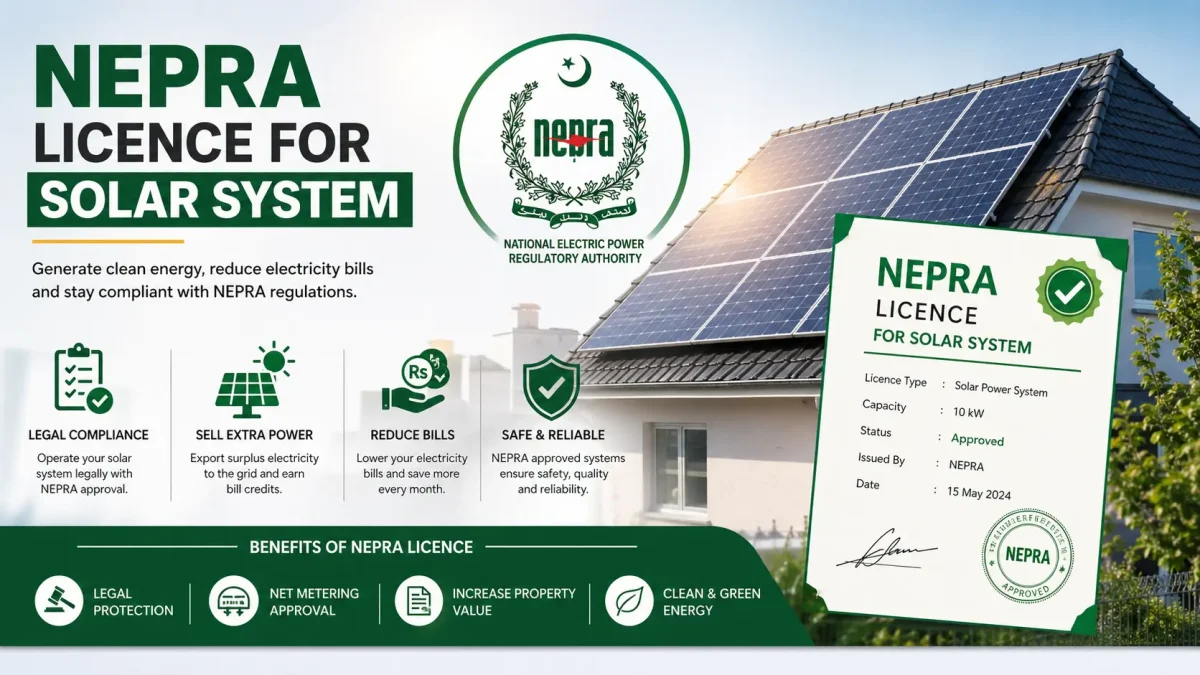
NEPRA Licence for Solar System: Rules and Application Checks
Official archive checked 23 October 2026 · Independent informational guide
Start with the right question
Whether your project needs a licence, concurrence, utility approval or another document must be checked against the current framework and your actual connection. Do not treat a headline about small systems as permission to connect equipment or export electricity. Ask the responsible electricity company for its current written checklist and the legal basis applying to your category.
This page is an independent research and application-preparation guide. It does not issue approvals or determine your legal position. A system’s size, connection arrangement, application date and existing agreement can all matter. Keep those details together before asking an installer or utility office to advise on your next step.
Where to check current NEPRA rules
NEPRA’s official legal archive lists the Prosumer Regulations, 2026, subsequent amendments, Concurrence Regulations and technical grid-connectivity rules. Use the archive to identify the applicable document and its amendment history. A draft consultation, news report and notified regulation are different kinds of evidence.
The archive was checked on 23 October 2026. We are not presenting an unverified universal fee, export rate or exemption threshold here. Ask the authority or utility to identify the exact current provision for your application, including any transitional treatment. Read the actual notification alongside later amendments rather than relying on a screenshot without context.
Separate the documents and decisions
A manufacturer datasheet establishes equipment specifications; it does not itself grant permission to connect to the distribution network. An installer’s quotation describes the proposed work; it is not a utility approval. A billing agreement concerns how energy and payments are handled. Keep the purpose of each document clear.
Create a simple project register showing the document name, issuing party, date, reference and action still outstanding. Ask who submits each form and who keeps the original. If an installer says that “all approvals are included”, request a written list of the actual steps and charges covered by that statement.
Describe your proposed system accurately
Before asking whether a licence is required, identify the proposed panel DC capacity, inverter AC rating, connection phase and whether export is intended. State whether the project is a new installation, an expansion or a modification of an existing approved arrangement. These details make your enquiry much more useful.
For a hybrid proposal, separately describe battery storage and backup circuits. A hybrid label alone does not explain its network interaction. Ask the designer to document operation during an outage and the connection controls. The qualified installer should check electrical design and compatibility rather than treating an equipment brand as sufficient evidence.
Prepare a project file before applying
Ask for the current official document checklist for your particular application. As a preparation exercise, organise your recent electricity bill, applicant details, property information, equipment schedule and installer contact information. Obtain a clear system diagram and the exact panel and inverter model codes. This preparation list is not a substitute for the utility’s formal requirements.
Check that names, addresses, equipment ratings and quantities agree across the proposal. Resolve discrepancies before submission. Keep a dated copy of what was actually filed and a record of any revised documents. Submit identity and financial information only through verified official channels, not to this informational website or an unknown social-media account.
Get fee instructions directly from the issuing body
Do not pay a fee because an article, forwarded message or unverified intermediary quotes a price per kilowatt. Request the current official fee instruction, payment destination and receipt process. Distinguish an authority fee from an installer’s service charge, equipment expense, meter work or other project cost.
Use an itemised budget with separate lines for each charge. Ask what happens if the application needs revision or the proposed capacity changes. Keep payment proofs and the written explanation of scope. If a figure cannot be linked to an applicable official instruction, obtain clarification before treating it as an established requirement.
Understand the order of installation and approval
Ask the utility and installer to explain the correct sequence for your project: application, assessment, any required design review, equipment work, inspection, metering and permission to operate. The exact steps must come from the current process applying to you. Do not assume delivery of equipment means the connection has been authorised.
Agree who communicates progress and how you can verify status using a reference number. A projected completion date is different from a guaranteed approval. If a delay occurs, ask which specific step remains outstanding rather than repeatedly submitting the same application or making informal payments to accelerate it.
Check an existing agreement before changing the system
If you already have a solar connection agreement, keep its signed copy and supporting approvals. Before adding panels, replacing an inverter or changing export settings, ask what notifications or permissions are required. A modification can raise different questions from routine maintenance, and another household’s experience may not match your arrangement.
Ask for the answer in writing and retain it with the revised design. Do not assume that an earlier approval automatically covers every future upgrade. Clarify whether a change affects equipment ratings, billing arrangements or the agreement’s other conditions before ordering additional equipment.
Keep technical safety separate from paperwork
A completed application does not remove the need for competent electrical design, suitable protection and proper commissioning. Ask the installer for the equipment manuals, commissioning record and operating instructions. Owners should understand monitoring and the correct fault-reporting route without opening electrical enclosures or handling live connections.
At handover, match the installed equipment to the approved and contracted schedule. Record serial numbers and keep product and workmanship warranties. Report discrepancies promptly through the agreed channels. If the equipment is damaged or unsafe, seek qualified assistance rather than continuing operation while a paperwork issue is resolved.
Questions to ask the utility or authority
Which current regulation and amendment apply to my connection and application date? What approval, registration, concurrence or licensing step is required for this specific system? Which document states the applicable fee? What equipment or design change requires a new submission? These focused questions are easier to answer than a general request for “the latest solar rule”.
Also ask how status is tracked, where an incomplete application can be corrected, and how a written decision or charge can be queried. Keep the date, reference number and response with your file. A clear record makes later follow-up more efficient and reduces reliance on conflicting informal advice.
How this revision handles uncertain claims
Earlier versions mixed proposed fees, assumed export rates and broad statements about small-system exemptions. Those figures have been removed from this guide because they should not be treated as a universal current rule. The replacement approach points readers to official documents and explains how to prepare a precise, verifiable enquiry.
For a purchase decision, confirm the rules and your applicable agreement before relying on projected export income. Use a separate equipment budget and a cautious savings estimate. For related background, read our solar tariff guide and compare system types before asking a qualified professional to assess the proposal.
Official source: NEPRA legal archive and current regulations.
Related guides for your next decision
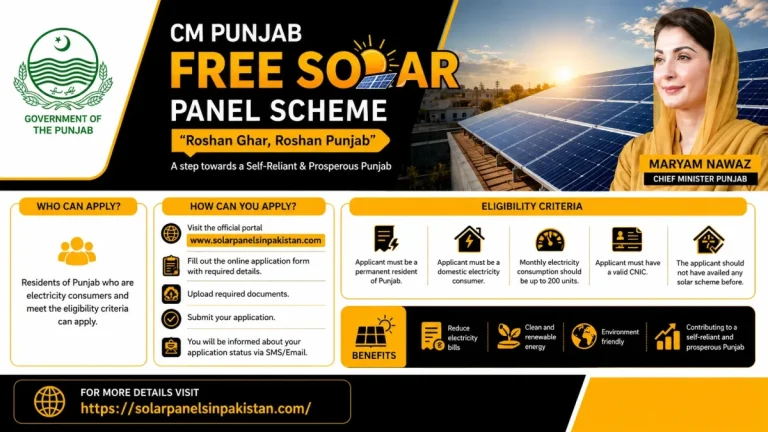
Distinguish a published proposal from an effective notification, and confirm which agreement and connection category applies to you. For related background, read CM Punjab Free Solar Panel Scheme and Solar energy tariffs in Pakistan. Compare current solar panel prices by brand and wattage when preparing your itemised equipment budget.