
Ziewnic Inverters and Lithium Batteries: Prices and Pairing Checks
Compare the Ziewnic inverter and battery as a documented pair. Product-family names, PV numbers and voltage labels do not establish continuous output, usable storage or full compatibility. Resolve the exact product identity before comparing price.
Source review: 11 November 2026, Solar Energy Desk. This guide separates seller listings from manufacturer specifications. No personal installation experience, measured brand ranking or universal compatibility claim is made.
Retailer price snapshot
The Power Plus Ziewnic collection, accessed on the review date, displayed these descriptions and prices. No price-effective date is stated; confirm the current offer, product revision, taxes, delivery and warranty.
| Retailer description | Displayed price |
|---|---|
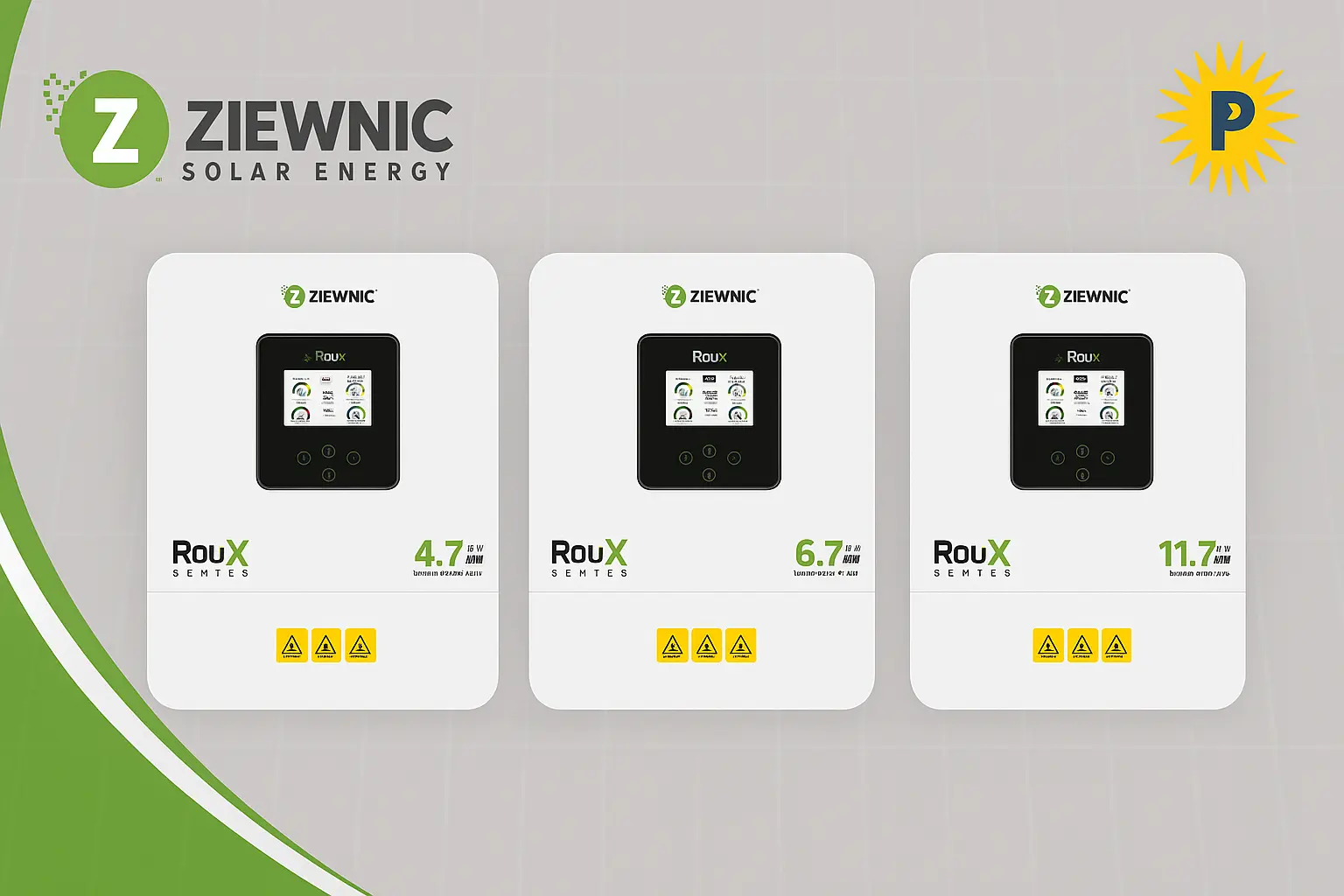
| Roux X-LV 4.7kW, 24V hybrid | Rs 134,000 |
| Roux X-LV 6.7kW, 48V hybrid | Rs 167,000 |
| Li-Wall 2.56kWh, 24V | Rs 146,000 |
| Li-Wall 5.12kWh, 48V | Rs 248,000 |
These are one seller’s listing labels, not manufacturer-confirmed specifications for the equipment that will arrive. Do not add an inverter and battery price and call the result a complete compatible installation.
A naming discrepancy to resolve: Roux 4.7
Ziewnic’s Roux-X-LV4.7 Version54 page has a specification table giving 3000W rated output, 24V battery voltage and 4000W maximum PV input. The retailer label above uses 4.7kW. Do not assume these describe the same revision or turn 4.7 in the name into a verified continuous output.
Ask the seller for the actual nameplate and matching current datasheet. Obtain written confirmation of continuous AC output, battery-only output where different, permitted PV input and the exact revision. Mark the discrepancy unresolved until the documents agree.
Read Li-Wall nominal energy and power separately
The official Li-Wall V2 51.2V page states 5120Wh nominal capacity and 100A maximum continuous discharge current. It associates its cycle claim with stated temperature, discharge-rate and depth-of-discharge conditions.
5120Wh equals 5.12kWh of nominal energy. It does not mean 5.12kW is continuously available to household appliances. The permitted operating conditions, BMS, inverter limits, reserve and conversion losses must all be considered. Nor does a cycle statement alone guarantee a fixed number of years at a particular house.
Same-brand equipment still needs compatibility evidence
Request confirmation for the exact inverter and battery models, voltage class, communications, cable requirements and supported firmware. A general claim that a battery works with most inverters does not settle the proposed pair.
Ask the installer to show the supported charging and discharge limits, reserve behaviour and response if communications are lost. Do not copy settings from another installation or assume a matching brand name removes those checks.
Use the battery guide and inverter guide to organise the requirement. Final configuration needs qualified assessment.
State the backup requirement
List essential circuits, simultaneous demand, starting loads and desired duration. The inverter must support the power, and storage must supply the required usable energy. More nominal kWh cannot correct an inadequate inverter or battery discharge limit.
For illustration, a steady 400W load over three hours needs 1.2kWh delivered. That is not the nominal bank size. Replace assumed reserve and losses with the selected product’s limits and have the installer check whether it can recharge before the next expected outage.
Compare a complete system quote
- Full inverter and battery codes and revisions.
- Continuous output, backup output and permitted PV arrangement.
- Usable energy, discharge limits and compatibility evidence.
- Communication cables, monitoring and mounting accessories.
- Protection, wiring, labour, delivery and commissioning.
- Quote validity, taxes and current stock confirmation.
- Separate product and installer warranties with claim contacts.
Ask who handles a fault involving both products. One written equipment schedule and service responsibility reduces the risk of the seller, installer and battery provider referring the problem to one another without a clear diagnosis.
Before commissioning
Match delivered labels and serials with the accepted schedule. Receive manuals, applicable warranties and owner monitoring access where included. Have the installer demonstrate the agreed outage scenario and explain the limits.
A hybrid or export-ready description does not grant grid-connection approval. Confirm the requirements for your installation with the responsible electricity provider, and retain the relevant paperwork.
Frequently asked questions
Does Roux 4.7 necessarily mean 4.7kW continuous output?
No. The linked manufacturer table and seller label need reconciliation for the actual supplied revision.
Does 5.12kWh mean 5.12kW of output?
No. Energy capacity and instantaneous power are different checks.
Does buying both products from Ziewnic guarantee compatibility?
Obtain evidence for the exact pair and supported configuration instead of assuming it.
Sources and limitations
The seller collection supports only the listing-price references. Manufacturer pages support their identified specifications, with the naming discrepancy made explicit. Use the installation checklist for project handover. No guaranteed runtime, service life or current stock is asserted.
3 Comments