Nepra Licence for Solar System – Complete Guide
According to the latest news, the Federal Government has ordered NEPRA to remove the fee and NEPRA licence for solar system requirements for solar net metering customers with systems below 25kW. Solar energy is growing rapidly in Pakistan. Due to high electricity prices and load shedding, many people are installing solar systems in their homes, shops, and industries. But one important question arises: Do you need a NEPRA solar licence in Pakistan? In this comprehensive guide, we will explain everything about the NEPRA licence for solar systems, including rules, amendments, net metering policies, and the latest updates for 2026.
What is NEPRA? (National Electric Power Regulatory Authority)
NEPRA is the official authority in Pakistan that regulates electricity generation, transmission, and distribution. It controls: If you want to connect your solar system to the national grid or sell electricity, NEPRA rules apply.
- Power companies
- Electricity tariffs
- Licensing for energy projects
- Renewable energy systems (including solar)
What is a NEPRA Solar Licence?
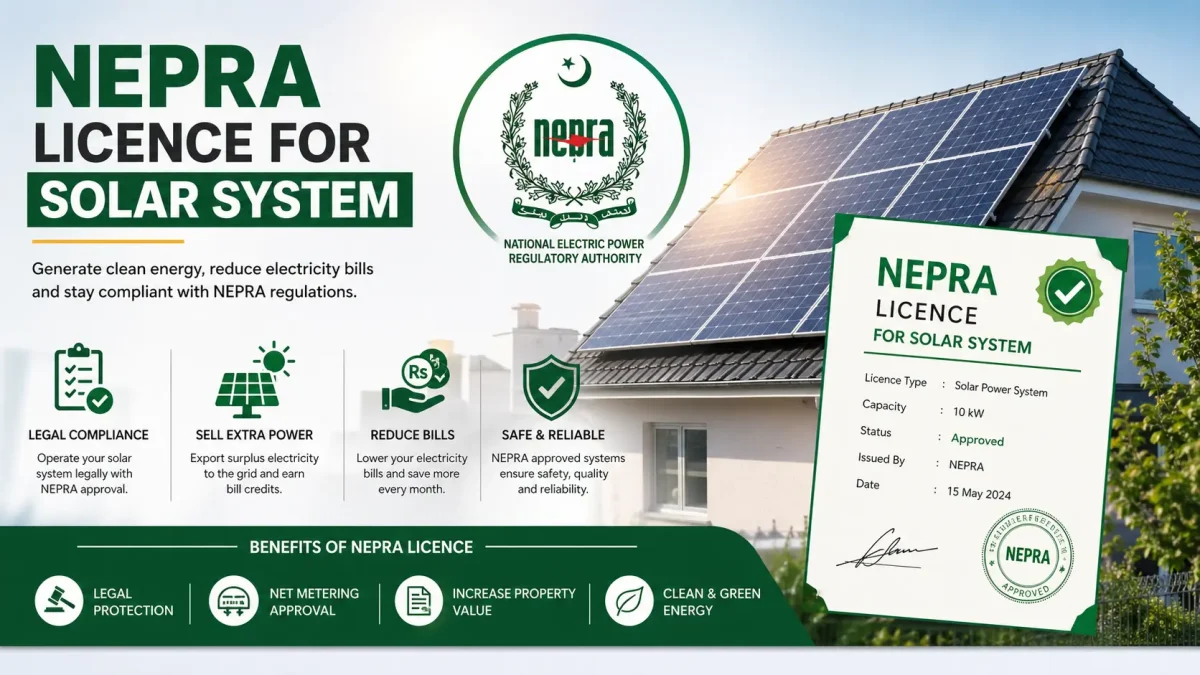
A NEPRA solar licence is official permission required for certain types of solar systems, especially those connected to the grid. For small home systems (without export), usually no licence is needed. It is mainly required when:
- You want to export electricity to the grid
- You install a commercial or large solar system
- You apply for net metering or net billing
Types of Solar Systems in Pakistan
Before understanding licensing, you should know the three main solar system types:
- On-Grid Solar System
- Connected with WAPDA/DISCO
- Sends extra electricity to the grid
- Requires NEPRA approval for net metering
- Off-Grid Solar System
- Not connected to the grid
- Uses solar batteries
- No NEPRA licence required
- Hybrid Solar System
- Works with grid + batteries
- May require approval if exporting electricity
NEPRA Licence for Solar Systems – Who Needs It?
Not everyone needs a licence. Here is a simple breakdown:
NEPRA Licence for solar system vs Net Metering for solar system
Many people confuse a Nepra solar licence with net metering approval. Here are the key differences between the Nepra licence for solar systems and net metering.
| Features & Descriptions | NEPRA Licence | Net Metering |
| Required for | Large/connected systems | Generating & Exporting electricity |
| Licencing Authority | NEPRA | NEPRA & Discos |
| Purpose | Legal approval | Billing system |
| Benefits | Legal operation | Bill reduction |
NEPRA Solar Amendments – Latest Updates
Solar policies in Pakistan are changing fast. These amendments are officially issued in regulatory updates. Here are the latest NEPRA solar amendments:
- Shift from Net Metering to Net Billing
- Old system: Net Metering
- New system: Net Billing
- You sell electricity at a fixed rate
- You buy electricity at a higher rate
- Profit is reduced compared to the old system
- Reduced Buyback Rates
- Previously: Around Rs. 25–26 per unit
- Now: Around Rs. 11–13 per unit (estimated)
- Contract Duration Changes
- Old contracts: ~7 years
- New proposals: ~5 years
- Processing Fee Introduced
- Recent update (2026): Rs. 1000 per kW processing fee for solar applications
- Amendments in NEPRA Regulations
- Licensing regulations
- Net metering rules
- Renewable energy frameworks
NEPRA Solar Licence Application Process
Here is a step-by-step process for getting a NEPRA solar licence or approval:
- System Design
- Calculate load requirements
- Choose system size (kW)
- Select inverter (NEPRA approved)
- Hire a licensed installer
- Must be certified
- Required for net metering approval
- Submit Application
- CNIC copy
- Electricity bill
- System design
- Technical specifications
- Pay Fee
- Processing fee per kW
- Application charges
- Technical Evaluation
- DISCO checks the system
- Safety inspection
- Meter Installation
- Bi-directional meter installed
- System activated
Documents Required for Solar Licence
- CNIC copy
- Property ownership proof
- Latest electricity bill
- Solar system design
- Installer certificate
- Affidavit/undertaking
Advantages & Disadvantages of Getting a Nepra Licence for Solar System
- Advantages of Nepra Solar Licence
- Legal Protection
- Avoid fines or disconnection
- Sell Electricity
- Export power to the grid
- Lower Bills
- Reduce electricity costs
- Increase Property Value
- Solar-enabled homes are more valuable
- Long-Term Savings
- Better ROI with a proper system
- Legal Protection
- Disadvantages of Nepra Solar Licence
- Complex Process
- Documentation takes time
- Policy Changes
- Rules are changing frequently
- Reduced Profit (New Rules)
- Net billing is less profitable
- Approval Delays
- Can take weeks or months
- Complex Process
- Common Mistakes to Avoid
- Using an unapproved inverter
- Hiring an unlicensed installer
- Wrong system size selection
- Incomplete documents
- Ignoring new NEPRA rules
Conclusion – Nepra Licence for Solar System
The demand for NEPRA solar licence, solar licensing, and net metering approval is increasing in Pakistan. With new amendments like net billing, reduced buyback rates, and processing fees, users must plan carefully. The NEPRA solar licence system in Pakistan is becoming more structured and strict. While earlier rules were simple, new amendments have changed the solar landscape. Even with new rules, solar energy is still a smart investment due to rising electricity prices. By understanding NEPRA rules and following proper procedures, you can save money, avoid legal issues and maximise solar benefits.
Tips for Pakistani Solar Users
- Start with an accurate load calculation
- Choose a reliable installer
- Stay updated with NEPRA amendments
- Prefer a hybrid system (flexibility)
- Plan ROI based on new net billing
- Follow the legal process carefully
- Check if licence is required