
Solar Agri Tubewell – A Complete Overview
Agriculture is the backbone of Pakistan’s economy, and the growing use of solar agri tubewells is helping strengthen it. The farming sector contributes significantly to GDP, employs a large portion of the rural population, and provides food security. One of the major costs in irrigated agriculture is the use of tubewells that pump groundwater for irrigation. Historically, these tubewells have been powered by either diesel engines or grid electricity. However:
Given these factors, shifting to renewable-powered irrigation, especially solar agri tubewells, presents a compelling opportunity: lower operating costs, improved reliability, reduced dependence on fuel imports, and a greener footprint. In short, for agriculture to remain viable and competitive, innovation in irrigation energy is essential.
The high cost of diesel for tubewell irrigation
To illustrate the challenge: several reports indicate that running tubewells on diesel is today more costly than switching to solar.
Hence, from a purely cost-of-production perspective, switching to solar irrigation is not just a “nice to have”; it is increasingly a necessity for agricultural sustainability and competitiveness in Pakistan.
Solar Agri Tubewells in Pakistan – Factors & Prices
The cost of solar agri tubewells in Pakistan depends on several factors, primarily the pump capacity, bore depth, water requirements, and the quality of solar components. Farmers can choose from small systems designed for limited acreage to larger setups for commercial farming.
In general, the price of a complete solar agri tubewells system (including solar panels, inverter, motor, and installation) ranges between Rs. 900,000 to Rs. 2,500,000 in most parts of Pakistan. Smaller setups for 5–7.5 HP pumps may start at around Rs. 900,000. 1.3 million, while medium-sized systems for 10–15 HP pumps usually fall between Rs. 1.5 million to Rs. 2 million. High-capacity systems for deep wells or large-scale irrigation can exceed Rs. 2.5 million, depending on water table depth and power demand.
These prices can fluctuate based on:
Although the initial investment is high, operating costs are almost zero because the system runs on free sunlight. Within a few years, most farmers recover the cost through savings on diesel or electricity bills.
CM Solarisation Program for Agri Tubewells – Overview
The CM Solarisation Program for Agri Tubewells is one of the most important steps taken by the Punjab government to support farmers and promote renewable energy in agriculture. The main goal of this initiative is to reduce the burden of high diesel and electricity costs incurred by farmers when operating their irrigation tubewells.
Under this program, the provincial government plans to convert thousands of agricultural tubewells to solar power, allowing farmers to use free, clean solar energy instead of paying high fuel bills. This not only helps in lowering the overall cost of crop production but also makes farming more sustainable in the long run. The scheme primarily targets small and medium-scale farmers, who are most affected by rising input costs. By installing solar systems on their existing solar agri tubewells, farmers can irrigate their fields without worrying about fuel shortages, load-shedding, or high utility bills. The government also ensures that quality solar equipment and proper installation are provided, so the systems run efficiently for many years.
Apart from the financial relief, this Solarisation drive also delivers environmental benefits, reducing the use of fossil fuels, lowering carbon emissions, and promoting the adoption of clean energy across rural Punjab. The shift to solar-powered irrigation directly contributes to energy security and agricultural stability, helping Pakistan move toward a more self-reliant and eco-friendly future.
Overall, the CM Solarisation Program reflects the vision of modernising Punjab’s agriculture through sustainable technology. It aims to empower farmers, strengthen food security, and encourage renewable energy at the grassroots level, turning sunlight into a source of prosperity for Pakistan’s farming community.
What farmers need to check & plan (Solar Agri Tubewells)
Conclusion – Solar Agri Tubewells
The use of solar agri-tubewells in Pakistan has become a smart, sustainable solution for farmers struggling with rising diesel prices and irregular electricity supply. By shifting to solar power, they can irrigate their crops at much lower cost while reducing their dependence on fossil fuels. Solar-powered agri-tubewells not only help farmers save money but also contribute to environmental protection by minimising carbon emissions.
This technology is proving essential for improving agricultural productivity, especially in remote rural areas where access to power is limited. The Government of Pakistan is also encouraging farmers through solarisation programs and subsidies, helping them adopt renewable energy for long-term benefits. With such efforts and growing awareness, solar agri tubewells are paving the way toward a greener, more energy-secure, and economically stable agricultural future for the country.
Frequently Asked Questions About Solar Agri Tubewells
What is a solar agriculture tubewell?
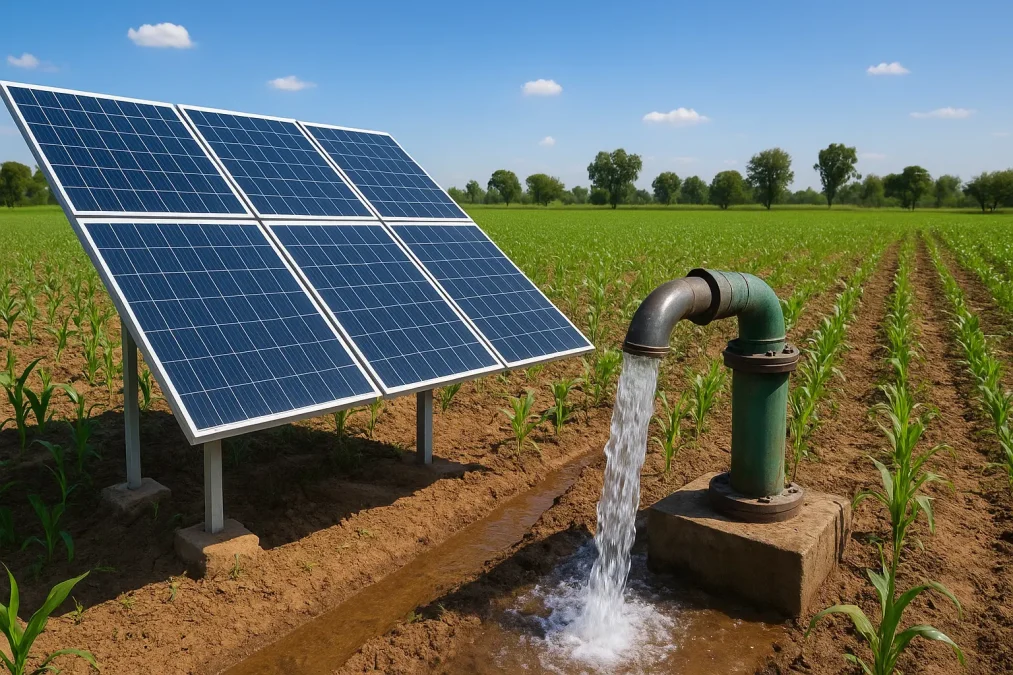
A solar agriculture tubewell is a water pumping system that uses solar panels to generate electricity and run a water pump. Farmers use it to irrigate crops without relying on grid electricity or diesel.
How does a solar tubewell work?
Solar panels produce electricity from sunlight. The inverter converts this electricity into usable power, which runs the water pump. During the day, the system pumps water directly, and some systems also store energy in batteries.
What is the CM Punjab solar tubewell scheme?
The CM Punjab solar tubewell scheme is a government initiative that helps farmers convert their electric or diesel tubewells into solar-powered systems. The goal is to reduce electricity costs and promote clean energy in agriculture.
Who is eligible for the CM Punjab tubewell scheme?
Farmers in Punjab who own agricultural land and have an existing tubewell connection are usually eligible. The applicant must have valid land records and a registered electricity or diesel tubewell.
Is the solar tubewell scheme free or subsidised?
The scheme is not fully free. The Punjab government provides a subsidy, while farmers pay a portion of the total cost. The exact share depends on the scheme phase and system size.
What documents are required to apply?
Applicants typically need a copy of their CNIC, land ownership documents, electricity bill (if applicable), and tubewell details. Additional documents may be required depending on the scheme requirements.
How much does a solar tubewell cost in Pakistan?
The cost depends on system size, pump capacity, and solar panels. A typical solar tubewell system may cost between PKR 800,000 and PKR 2,500,000 before subsidy.
How can I apply for the CM Punjab solar scheme?
Farmers can apply through the official government portal or designated offices. The application process usually includes registration, document submission, and verification.



One Comment