
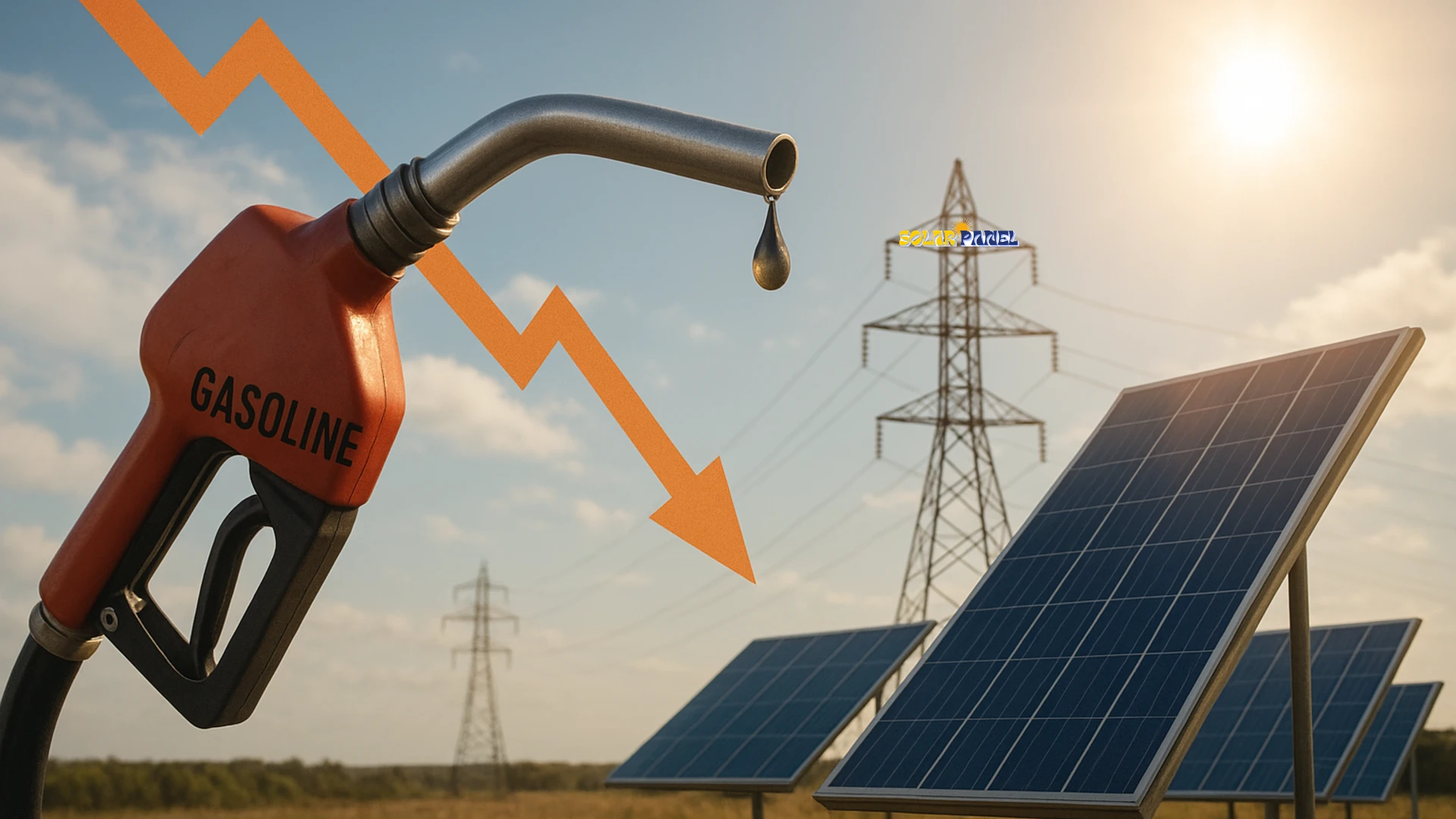
Petrol Price In Pakistan – Shift Towards Solar Energy
The cost of living in Pakistan has been under pressure in recent months, and fuel is no exception. In 2026, rising petrol prices in Pakistan are not just affecting vehicle owners — they’re also driving up electricity costs. Since a significant portion of the country’s power generation relies on imported fuel, every price hike quickly reflects in electricity bills. This direct link between petrol and power costs is driving more households and businesses toward solar energy, a cleaner and more stable alternative. This has encouraged households and enterprises to explore renewable energy solutions, with solar power emerging as the most practical choice. Government policies such as net metering and gross metering allow consumers to sell excess electricity back to the grid, making solar installations more financially rewarding.
The global oil market has recently become unstable due to rising tensions in the Middle East. The ongoing conflict between Iran and Israel has created uncertainty about oil supply routes, especially in the Strait of Hormuz, one of the world’s most important oil transport channels. Because of these geopolitical risks, international crude oil prices have begun to rise again. As a result, many countries, including Pakistan, may face higher petrol prices in the coming months.
Due to the sharp increase in petrol prices, the government has also announced new measures to reduce electricity consumption across Pakistan. According to these policies, schools and colleges will now operate only four days a week, from Monday to Thursday, to save energy. Additionally, markets will be required to close by 8:00 PM starting from 6 April as part of nationwide energy-saving efforts. These steps aim to control rising fuel and power costs, although further clarity on implementation and additional rules is still awaited.
Petrol Price In Pakistan – April 10, 2026
Petrol price in Pakistan has increased again today due to rising global oil prices linked to ongoing tensions between Iran, Israel, and the USA. The government had previously provided subsidies to control fuel costs, but officials now say it is no longer financially possible to continue broad relief measures. At the same time, the IMF is also pressuring Pakistan to increase fuel prices to stabilise the economy. As a result, petrol prices have surged by Rs. 137 per litre, while diesel has increased by Rs. 184 per litre. However, the government has announced limited targeted subsidies, stating that motorcycle users will receive a Rs. 100 per litre subsidy on up to 20 litres per month for three months. Additionally, agricultural farmers will be given a Rs. 1,500 per acre subsidy, and passenger bus operators will receive Rs. 100,000 per month support to ease the burden of rising fuel costs.
Note: The government has announced a subsidy for motorcycle users, but it has not clearly explained the eligibility criteria or distribution method. Consumers are still waiting for details on how and when this subsidy will be provided.
Petrol price in Pakistan is steadily increasing, adding extra financial pressure on households and businesses. The rise not only impacts electricity generation costs but also drives up transportation expenses, making goods and services more expensive. According to the latest Ogra (Oil & Gas Regulatory Authority) announcement, petrol prices in Pakistan for January 2026 are:
Note: Prime Minister Shehbaz Sharif stated on Friday that the government has cut the petrol levy by Rs80 per litre. Following this reduction, the new petrol price for consumers has been set at Rs 378 per litre.
Fuel Types | Old Price Per Litre | New Fuel Price Per Litre | Change In Price Per Litre |
Petrol Price In Pakistan | 458.41 | 378 | 80 PKR ↓ |
High-Speed Diesel Price | 335.86 | 520.35 | 184.49 PKR ↑ |
Kerosene Oil | 176.81 | 176.81 | 1.46 PKR ↓ |
Light Speed Diesel | 159.76 | 159.76 | 2.4 PKR ↓ |
How Petrol Price Hikes in Pakistan Affect Electricity Costs
Pakistan’s electricity generation still relies partly on thermal power plants that use furnace oil and diesel. When the price of fuel rises, the cost per Unit of electricity from these plants also increases. Global oil markets remain unstable due to geopolitical tensions, supply chain disruptions, and currency fluctuations. As Pakistan imports most of its petroleum products, any change in global markets quickly affects local fuel prices. This volatility makes fuel-powered electricity an unreliable and expensive long-term solution.
The recent increase in petrol prices in Pakistan is expected to directly raise electricity costs across the country. Many power plants still rely on furnace oil and diesel for electricity generation, so higher fuel prices increase the overall cost of producing electricity. As a result, the government may pass this burden onto consumers through higher electricity tariffs and fuel adjustment charges. This will not only increase monthly electricity bills for households but also raise production costs for industries and businesses, leading to overall inflation in the economy.
Electricity Price In Pakistan 2026
In Pakistan, electricity generation relies heavily on oil-based power plants, so petrol and fuel price hikes directly increase electricity production costs. As fuel prices rise, the burden quickly shifts to consumers through higher electricity bills. In 2026, the average electricity price in Pakistan has already seen multiple upward revisions, with per-unit costs reaching record highs. This trend affects not only households but also industries, thereby increasing the cost of living and production nationwide. For instance, this makes solar energy an increasingly attractive alternative, offering long-term savings and protection against unpredictable fluctuations in petrol prices in Pakistan.
“Before reviewing the latest electricity prices in Pakistan, it’s important to understand the difference between protected and unprotected consumers, as this directly affects the per-unit tariff.”
Protected Consumers
Households that consume 200 units per month or less consistently for the last six months. They will receive subsidised rates; the policy’s purpose is to protect low-income individuals from higher electricity costs. When protected consumers cross 200 units, they will be subject to unprotected rates.
Protected Units | Unit Price |
Up to 50 units – Life Line | 3.95 Per Unit |
01 – 100 Units – Life Line | 7.74 Per Unit |
01 – 100 Units | 10.54 Per Unit |
101 – 200 units | 13.01 Per Unit |
Unprotected Consumers
Households that consume more than 200 units in even one of the last six months or new connections without a 6-month consumption history. They will pay standard rates without any government subsidy, which are much higher than the subsidised rates. Even if you use just 201 units one month, you lose the protected status for the next billing cycle, and your rates go up significantly.
Unprotected Units | Unit Price |
01 – 100 Units | 22.44 Per Unit |
101 – 200 Units | 28.91 Per Unit |
201 – 300 Units | 33.10 Per Unit |
301 – 400 Units | 37.99 Per Unit |
401 – 500 Units | 40.20 Per Unit |
501 – 600 Units | 41.62 Per Unit |
601 – 700 Units | 42.76 Per Unit |
Solar Energy – Why It’s the Best Option
As electricity prices continue to rise in Pakistan, solar energy is becoming the most innovative and cost-effective solution for homes and businesses. A complete 5 kW solar system can be installed at a one-time cost, helping you save thousands of rupees every month on electricity bills. For larger needs, a 10kW system offers even greater savings. With hybrid inverters and advanced batteries, you can store solar power for use at night, eliminating load shedding and ensuring uninterrupted electricity. The best part is that when petrol prices increase, electricity costs often rise as well—but with solar, your monthly expenses remain stable. It’s a long-term investment that not only reduces bills but also gives you energy independence.
Conclusion
In conclusion, petrol price in Pakistan continues to rise due to global tensions and economic pressures, making fuel increasingly unaffordable for the public. Government policies are now focused on reducing subsidies and shifting towards targeted relief instead of broad support. While small subsidy programs have been announced for specific groups, their implementation remains unclear. At the same time, pressure from international institutions like the IMF is forcing the government to maintain higher fuel prices. These policies aim to stabilise the economy but are increasing the financial burden on citizens. Moving forward, effective planning and transparent subsidy systems will be essential to balance economic stability and public relief.

Frequently Asked Questions About Petrol Price In Pakistan
What is the petrol price in Pakistan today?
As of today, the petrol price in Pakistan is 378 PKR per litre.
What is the diesel price in Pakistan today?
As of today, the diesel price in Pakistan is 520.35 PKR per litre.
What is the current electricity price per unit in Pakistan?
Electricity unit prices depend on your monthly usage and whether you are a protected or unprotected consumer.
Who are the protected consumers in Pakistan’s electricity policy?
Protected consumers are households that have used 200 units or fewer each month for the past six months, qualifying for government-subsidised rates.
Who are unprotected consumers in Pakistan’s electricity policy?
Unprotected consumers who use more than 200 units per month or have exceeded the limit within the last six months pay higher non-subsidised rates.
What is the policy for 200 units over six months?
If a household uses 200 units or less for six consecutive months, it remains in the protected category and continues to get subsidised rates.
What are the fuel prices in Pakistan today?
As of today, the petrol price in Pakistan is 378 PKR per litre, and the diesel price is 520.35 PKR per litre.

5 Comments