Tubular Battery vs Lithium Battery for Home Use
If you search this question online. Tubular Battery vs Lithium Battery for home use: which should you buy. You will find dozens of articles comparing specs on paper. This one is different. I have been working with solar systems in Pakistan since 2019, have personally used both tubular and lithium batteries, and have watched hundreds of customers make this decision. What follows is not a copy-paste comparison it is what I actually know from real experience on the ground in Pakistan.
My Personal Experience With Both Batteries
I started with an Osaka tubular battery in 2019, running it on a combined UPS and solar setup. It lasted 3 years before performance dropped noticeably. Thereafter, I switched to a Phoenix tubular battery, which I have been running for the past 3 months and so far, everything is working perfectly.
I have also worked closely with customers who have moved to lithium batteries. So when I compare these two technologies, I am not going by specs on a datasheet. I am going by what I have seen work and fail in Pakistani homes, in Pakistani weather, on Pakistani electricity.
What Actually Goes Wrong With Tubular Batteries in Pakistan
Before comparing the two, let me tell you what kills tubular batteries in Pakistan because this is something most buying guides never mention.
The first problem is that some shopkeepers sell repaired or refurbished batteries as new. This is more common than people realise. A battery that looks new in the box may have already done 2 to 3 years of work. Always buy from an authorised brand dealer, ask for a fresh warranty card, and check the manufacturing date printed on the battery.
The second issue is maintenance. Tubular batteries need distilled water top-ups every 45 to 60 days in summer. Most people forget, or use tap water, which contains minerals that damage the plates permanently. Once that damage is done, it cannot be reversed.
The third concern is overcharging and overloading. A cheap or poorly configured charge controller will push too much current into the battery, raising its temperature and buckling the plates from the inside. The battery appears fine for a year and then dies suddenly.
These three problems fake batteries, poor maintenance, and overcharging are responsible for most of the short tubular battery lifespans people complain about in Pakistan. A tubular battery that is bought genuine, maintained properly, and charged correctly will easily last 5 to 6 years.
The Direct Comparison – Tubular Battery vs Lithium Battery
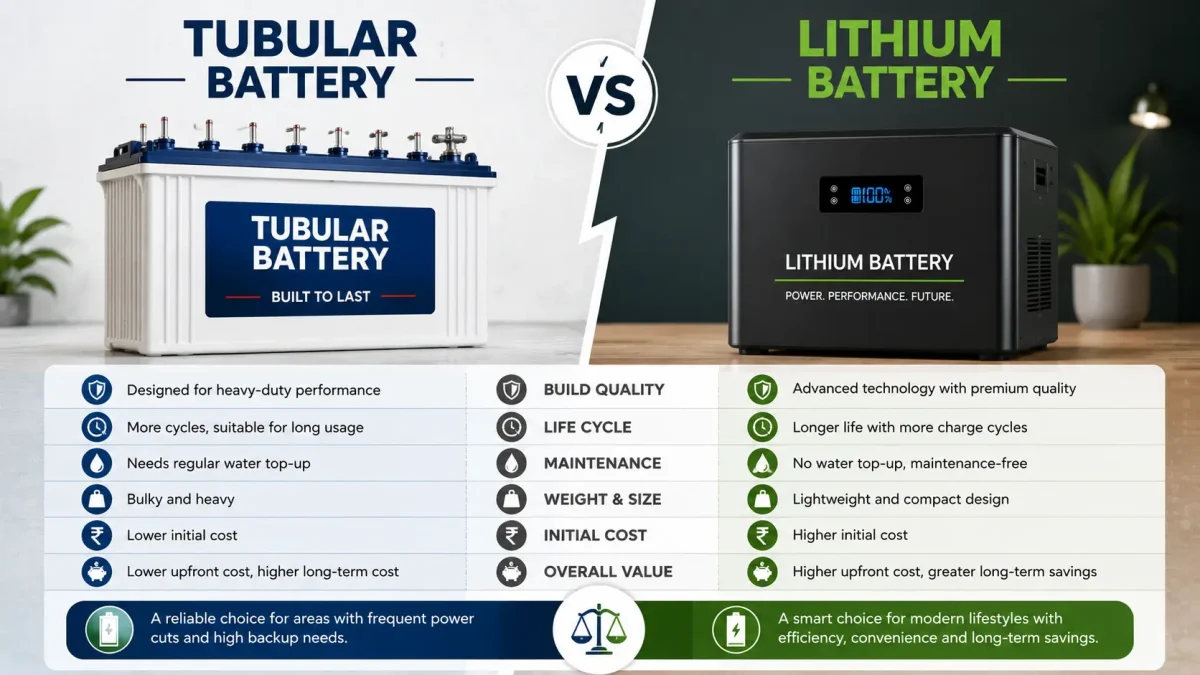
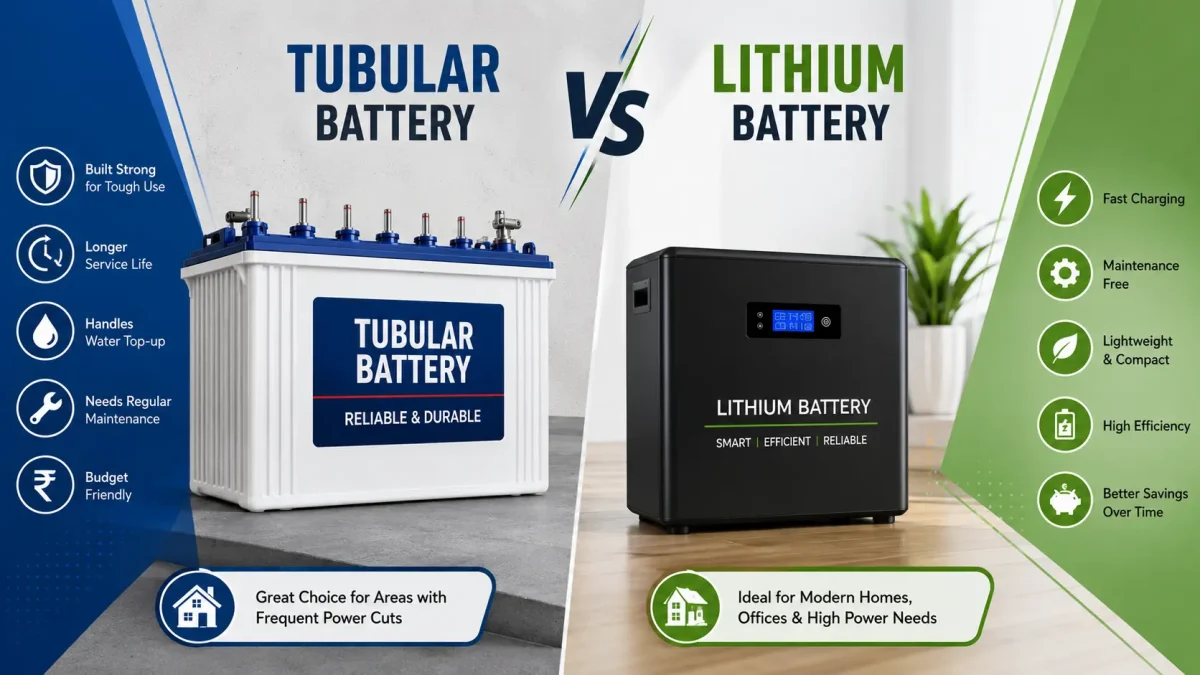
| Features | Tubular Battery | Lithium Battery |
| Technology | Lead-acid tubular plates | Lithium-ion / LiFePO4 |
| Lifespan | 4 to 6 years | 8 to 12 years |
| Usable Capacity | 50 to 60% of rated Ah | 80 to 100% of rated Ah |
| Charging Speed | 8 to 10 hours | 2 to 4 hours |
| Maintenance | Water top-up every 45 to 90 days | Completely maintenance free |
| Weight | 40 to 60 kg | 10 to 20 kg |
| Price (200Ah approx.) | Rs. 55,000 to Rs. 75,000 | 180,000 to Rs. 280,000 |
| Heat Performance | Good if installed well | Excellent |
| Best For | Budget buyers, existing systems | New solar systems, long-term view |
Tubular Battery vs Lithium Battery – Which Should You Buy?
This depends entirely on your budget and I will be direct about it. If your budget for battery storage is around Rs. 60,000 to Rs. 80,000, lithium is actually within reach for a single 12V unit, which currently costs around Rs. 65,000 in Pakistan. At that price point, a single lithium battery becomes a genuine option worth considering especially if you are pairing it with a new solar system.
If your budget is tighter, or you need multiple batteries for a larger bank, tubular is still the smart, proven choice. Four tubular batteries in a 48V configuration is a solid setup for a 5kW solar system and will serve most Pakistani homes well.
If you can afford lithium, go for it. The customers I have seen make the switch to lithium with their solar systems have not looked back. Zero maintenance, faster charging, more usable energy the experience is noticeably better.
For a 5kW solar system in Pakistan, my recommendation is this: if budget allows, go lithium. If budget is the constraint, four tubular batteries in a 48V bank is a good and reliable option. Two tubular batteries is generally not enough for a 5kW system that needs to run loads through the night you will deep-discharge them regularly and shorten their life.
The mistake I see most often is people buying two batteries to save money upfront and then replacing them every 3 years instead of every 5 to 6. Over 10 years, the maths does not work out in their favour.
Does Pakistan’s Heat Affect Battery Performance?
In my experience, heat is much less of a problem than people think as long as the system is installed properly. With correct load management and a well-ventilated installation, tubular batteries hold up well even in cities like Multan and Lahore where summer temperatures regularly hit 44 to 46 °C. The concerns happen when batteries are installed in sealed rooms with no airflow, or when they are overloaded during peak summer hours. A battery that runs hot every day will fail early regardless of brand. Keep it shaded, keep it ventilated, and manage your load and heat becomes a minor factor.
Which is Better for a Solar System in Pakistan — Tubular Battery vs Lithium Battery
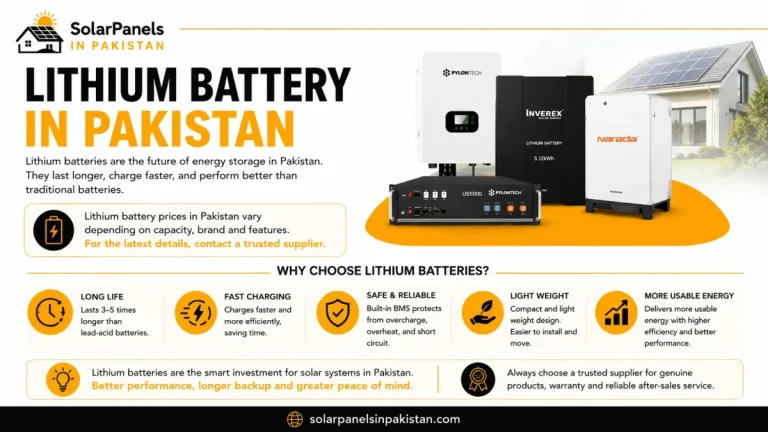
For a solar system specifically, lithium is now the better choice if you can buy a good quality, original battery. The reason lithium suits solar better comes down to one key advantage: usable capacity. A tubular battery should only be discharged to 50 to 60% of its rated capacity to protect its lifespan. A lithium battery can be discharged to 80 to 100% without damage. This means a 200Ah lithium battery effectively gives you almost double the usable energy of a 200Ah tubular battery in daily solar use. That is a major difference for a system that charges during the day and runs loads through the night. However and this is important the decision in Pakistan still comes down to three things: budget, information, and trust. On trust, this is where tubular batteries still have a real advantage in Pakistan. Established local companies like Exide, Osaka, AGS, Phoenix, and Daewoo have been manufacturing tubular batteries in Pakistan for decades. People know these brands, trust them, and can find service and warranty support almost anywhere in the country.
Lithium batteries in Pakistan are mostly imported from China and other countries. Many Pakistanis are not familiar with these brands, cannot verify their quality easily, and are uncertain about after-sales support. That unfamiliarity creates hesitation and in numerous instances, that hesitation is reasonable. There are cheap, low-quality lithium batteries in the Pakistani market alongside good ones, and an average buyer without technical knowledge may not know the difference. This is why most Pakistanis are still choosing tubular even when they can afford lithium. It is not because tubular is technically better it is because they trust what they already know.
The good news is that awareness is growing. Customers are becoming more informed. As more people use lithium batteries and share their experiences, trust in the technology will build over time just as it did with solar panels themselves a few years ago. My practical advice: if you are buying lithium for a solar system, do your research on the brand. Search for companies with a physical presence in Pakistan, a proper warranty process, and verifiable reviews from local users. Do not buy the cheapest option available. A good original lithium battery is worth the investment. A cheap unverified one is a risk not worth taking.
Which Lasts Longer in Pakistan — Tubular battery vs Lithium Battery?
Lithium without any doubt. This is not even a close comparison. In my experience, a tubular battery’s realistic peak life in Pakistan is about 3 years under average usage conditions. With excellent maintenance, careful load management, and ideal installation, you can push it to 5 to 6 years, but that requires consistent effort from the owner.
Lithium batteries last 8 to 12 years. They require zero maintenance. There is no water to top up, no plates to worry about, no overcharging risk from a basic charge controller. You install them and forget about them for nearly a decade.
The difference becomes even bigger when you factor in weight and convenience. A tubular battery weighs 40 to 60 kg moving or reinstalling one is a job for two people. A lithium battery of the same capacity weighs 10 to 20 kg and can be handled by one person easily.
For anyone asking purely about lifespan and ease of ownership, lithium wins on every count. The only reason tubular batteries are still the majority choice in Pakistan is price and that gap is closing every year.
Which Tubular Battery Brand Should You Buy in Pakistan?
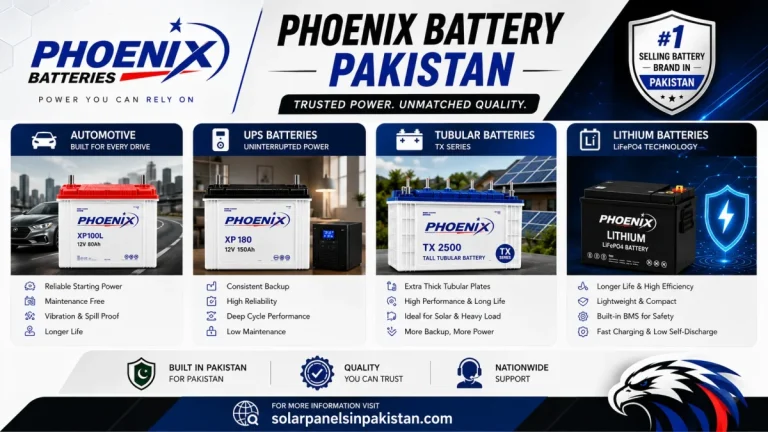
Based on my personal experience and what I have seen in the market, the three brands I recommend are Osaka, Phoenix, and AGS. All three have a track record in Pakistan, widely available service networks, and consistent quality.
I would not point anyone toward no-name or unbranded tubular batteries regardless of how cheap they are. The plate quality in cheaper batteries is noticeably lower, and you will replace them in 2 years instead of 5. The money you save on the purchase you lose twice over in early replacement.
Will Lithium Take Over From Tubular in Pakistan?
Yes, but not completely, and not quickly everywhere. In larger cities and developed areas, the shift is already happening. Customers who can afford lithium are choosing it. New solar installations are increasingly going lithium first. The technology is improving fast and prices are coming down with every passing year.
But in smaller cities, villages and rural areas of Pakistan, tubular batteries will remain dominant for years to come. People in those areas trust what they know, have access to local service and maintenance, and do not yet have the same access to lithium dealers and support networks. The technology will reach them just later.
My honest prediction: in 5 years, lithium will be the default choice for new urban solar installations in Pakistan. Tubular will still be widely used for replacements, rural setups, and budget buyers. Both will coexist just in different segments.
Conclusion – Tubular Battery vs Lithium Battery
Buy tubular if you are on a budget, replacing an existing battery, or installing in a rural area where lithium support is limited. Buy from Osaka, Phoenix, Inverex or AGS. Maintain it properly, do not overload it, and you will get 5 to 6 solid years out of it.
Buy lithium if you are building a new solar system and can absorb the upfront cost. The experience is better in every measurable way more usable energy, zero maintenance, faster charging, longer life. The customers I have seen make this switch are satisfied without exception.
If I were installing a brand new solar system in my own home today with the budget to do it properly, I would go lithium. But the tubular batteries in my current setup are doing their job perfectly and there is no reason to fix what is not broken.